
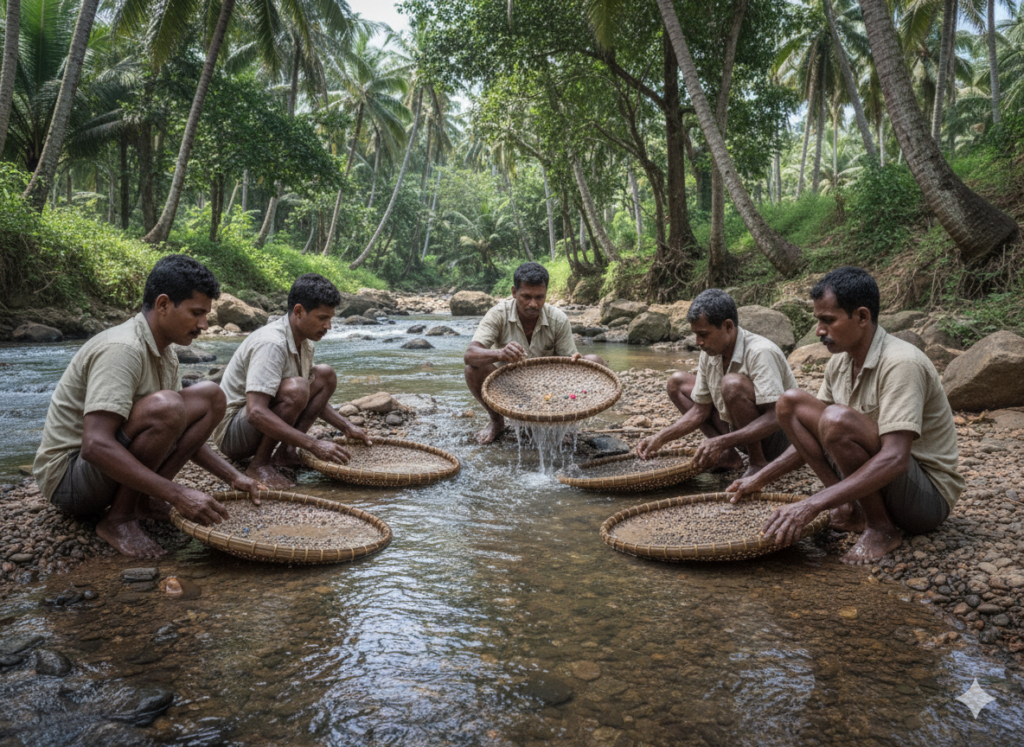
Sri Lanka Gem Washing
Sri Lanka Gem Washing
Discover the Traditional Art of Gem Washing
Gem washing is an important part of Sri Lanka’s traditional gemstone industry. After gem-bearing gravel is brought out from the ground, it must be carefully washed and sorted to reveal the valuable stones hidden within it.
This traditional process is particularly associated with the Ratnapura region, Sri Lanka’s famous gem-mining area. For generations, local miners have developed the knowledge and skills needed to identify promising gem-bearing gravel and carefully separate gemstones from soil, sand and other stones.
How Gem Washing Works
The gem-washing process begins with gem-bearing gravel, locally known as illam. The gravel is placed into a washing area or traditional washing apparatus and mixed with water.
Miners carefully wash the gravel to remove mud, sand and lighter materials. Because gemstones are generally denser than many of the surrounding materials, they can remain behind during the washing process.
The remaining gravel is then carefully examined by experienced workers who look for the distinctive colours, shapes and textures of gemstones.
A Skilled Traditional Process
Although the process may appear simple, gem washing requires considerable experience and patience. Skilled workers know how to handle the gravel, control the washing process and recognize stones that may contain valuable gemstones.
The excitement comes when a colourful stone or crystal is discovered among the washed gravel. Each stone is then examined more closely to determine whether it is a gemstone and what further cutting or polishing may be required.
Water and Gem Mining
Water plays a vital role in traditional Sri Lankan gem washing. It helps separate soil, clay, sand and lighter materials from the heavier gem-bearing gravel.
Traditional washing areas may use simple tools and carefully designed washing methods that have been passed down through generations. This connection between water, earth and craftsmanship is an important part of Sri Lanka’s gem-mining heritage.
From Gem Washing to Gem Cutting
Gem washing is only one stage of the gemstone journey. Once potential gemstones are discovered, they are cleaned, examined and evaluated.
Experienced gem cutters then determine the best way to cut and polish each stone, taking into consideration its natural colour, clarity, shape and internal characteristics.
A rough stone discovered during gem washing can eventually become a beautiful Ceylon Sapphire, Star Sapphire, Cat’s Eye, Garnet, Zircon or another Sri Lankan gemstone.
Experience Sri Lanka’s Gem-Washing Heritage
For visitors, witnessing traditional gem washing provides a fascinating look at an important part of Sri Lanka’s cultural and economic heritage. It offers an opportunity to understand the amount of work, knowledge and patience involved before a gemstone reaches a jewellery shop or collector.
A visit to a traditional gem-washing area can be an unforgettable experience for travellers interested in Sri Lankan culture, gemstones, traditional industries and local craftsmanship.
Discover the Hidden Treasure of Sri Lanka
Every handful of gem-bearing gravel carries the possibility of discovery. Through traditional gem washing, Sri Lankan miners patiently search for nature’s hidden treasures — continuing a remarkable gemstone tradition that has made the island famous around the world.